

UPS to Cut 30,000 Jobs as It Reduces Reliance on Amazon — What It Means for Shippers and 3PL Strategy

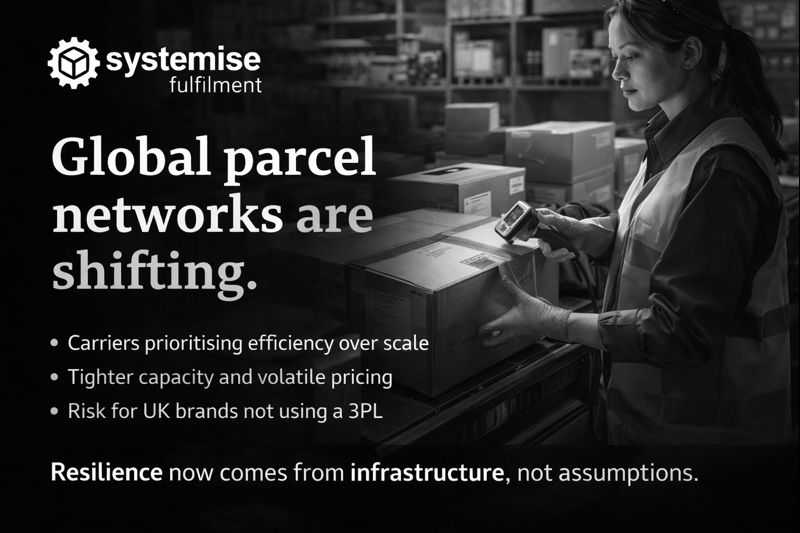
UPS to Cut 30,000 Jobs as It Reduces Reliance on Amazon — What It Means for Shippers and 3PL Strategy
United Parcel Service (UPS), one of the world’s largest logistics and package delivery companies, has announced plans to eliminate up to 30,000 operational jobs in 2026 as part of a strategic shift away from shipment volume for its largest former customer, Amazon. The move represents roughly 6% of UPS’s global workforce and follows earlier reductions of 48,000 jobs and closures of dozens of facilities in 2025.
The cuts are tied to UPS’s broader effort to improve profitability and operational efficiency by reducing exposure to low-margin e-commerce volume, particularly from Amazon, which has been shrinking its parcel reliance on traditional carriers as it builds out its own logistics network.
According to the company’s leadership, the reductions will primarily occur through attrition and voluntary separation programmes for drivers, and UPS expects to close at least 24 facilities in the first half of the year as it reconfigures its network to match current shipment profiles.
Strategic Shift Refocuses UPS Business Model
UPS executives have said this shift reflects a desire to focus on higher-margin segments such as healthcare logistics and deliveries for business customers, rather than the high-volume, low-margin e-commerce shipments that once defined rapid network growth.
Despite the workforce reductions, UPS reported a better-than-expected fourth-quarter revenue performance leading into 2026, with profit exceeding analysts’ forecasts even as network volumes shift.
What This Means for Shippers Not Using a 3PL
For brands and businesses that rely directly on carriers like UPS (or FedEx and USPS) without an intermediary logistics partner, this news has several important implications:
1. Reduced Capacity and Transit Predictability
As UPS reduces operational staff and facilities, network capacity constraints may occur, particularly in areas where Amazon volume previously supported throughput. Consolidation of hubs and shifts toward automation can alter transit times and delivery windows.
2. Volatility Around Peak Seasons
With fewer drivers and operational resources, traditional carriers may struggle to meet guaranteed delivery commitments during peak periods (e.g., holiday season or promotional launches) — a known challenge that has historically pressured networks during high traffic cycles.
3. Margin Pressure and Price Shifts
UPS’s focus on profitability over volume suggests carriers may increasingly prioritise higher-margin shipments. Without a 3PL negotiating contracts and distributing volume across multiple carriers, direct shippers may face steeper pricing and less favourable service level agreements (SLAs).
4. Increased Risk for Business Continuity
Dependence on a small set of national carriers exposes businesses to strategic network changes like this one. A shift such as UPS’s move away from Amazon volume can ripple through parcel networks, affecting reliability, cost forecasts, and service consistency.
Why 3PLs Matter Now More Than Ever
A third-party logistics partner (3PL) can mitigate these risks by:
Diversifying carrier mix: Routing shipments across UPS, FedEx, USPS, and regional carriers based on cost and service metrics
Providing SLA management: Negotiating performance guarantees and real-time logistical support
Optimising routing and costs: Using technology to balance speed, cost, and carrier capacity
Scalable capacity planning: Adjusting fulfilment and delivery strategies based on market conditions, not a single carrier’s internal changes
In a shifting logistics environment — where even longstanding relationships between carriers and major e-commerce platforms can materially change — a scalable fulfilment partner helps brands maintain predictability, protect margins, and ensure continuity at scale.
Carriers reducing volume and network capacity can have broader impacts on service levels, pricing, and peak-season reliability.
We're the end-to-end fulfilment and growth partner for ambitious eCommerce brands. From order processing to last-mile delivery, our connected network, automation, and strategic support give you the speed, scale, and clarity to grow without limits.